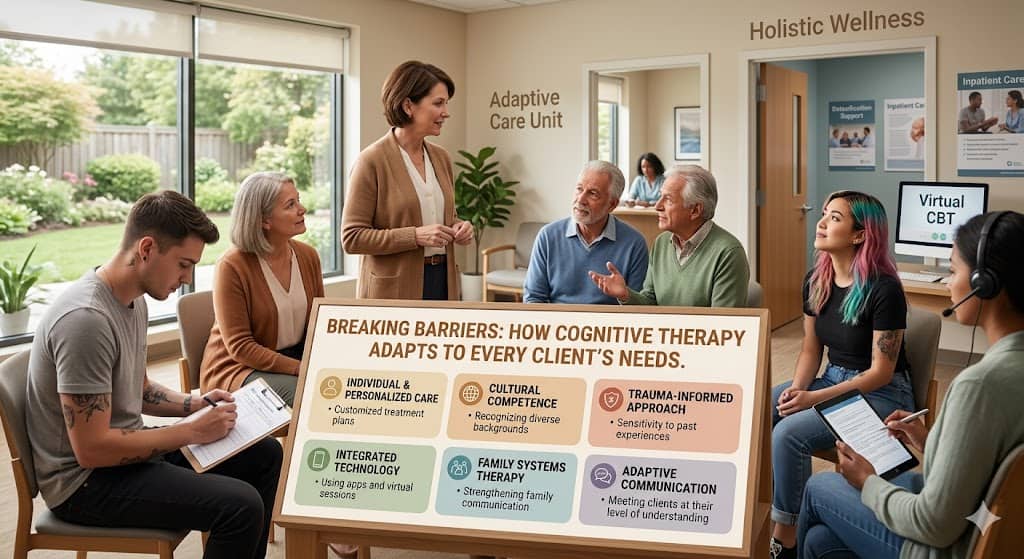
 Recovery from addiction and mental health challenges is never a one-size-fits-all process. Each person brings a unique history, set of experiences, and emotional needs into treatment. This is why cognitive therapy remains one of the most effective approaches in modern behavioral health care. It is flexible, evidence-based, and deeply personal in how it helps clients understand and change the thoughts that influence their behaviors. At ICCT Utah, cognitive therapy is used as part of a comprehensive approach to addiction recovery and mental health treatment that includes inpatient care, outpatient programs, and holistic support tailored to the whole person.
Understanding Cognitive Therapy in Addiction and Mental Health Treatment
Cognitive therapy focuses on the relationship between thoughts, emotions, and behaviors. When individuals struggle with addiction or mental health conditions, their thinking patterns often become distorted. These thoughts can fuel cravings, increase emotional distress, and reinforce unhealthy coping mechanisms.
Through structured therapeutic work, clients learn to identify these patterns, evaluate their accuracy, and replace them with healthier alternatives. Over time, this process helps individuals regain control over their responses and build a stronger foundation for recovery.
Why Cognitive Therapy is So Effective
Cognitive therapy is effective because it is practical and adaptable. It does not just focus on insight. It focuses on action. Clients are encouraged to apply what they learn in real time, which helps reinforce lasting behavioral change.
Key benefits include:
- Improved emotional regulation and awareness
- Stronger coping skills for stress and triggers
- Reduced relapse risk through thought restructuring
- Increased confidence in decision-making
- Better communication and relationship skills
Adapting Cognitive Therapy for Every Client
One of the most important strengths of cognitive therapy is its ability to adapt to different individuals. At ICCT Utah, treatment is not standardized. It is personalized to meet each client where they are in their recovery journey.
Supporting Teens and Young Adults
Younger clients often face challenges related to identity, peer pressure, and emotional development. Cognitive therapy helps them understand how their thoughts influence their behavior and teaches them healthy ways to respond to stress, conflict, and social pressures.
Therapists often use structured, engaging techniques that help younger clients stay involved and build trust in the recovery process.
Supporting Adults in Recovery
Adults in treatment often juggle responsibilities such as work, parenting, and relationships. Cognitive therapy helps them identify patterns of thinking that contribute to overwhelm, substance use, or emotional distress.
By learning how to reframe these thoughts, adults can make more intentional choices that support stability, recovery, and personal growth.
Supporting Older Adults
Older adults may face unique challenges such as grief, health concerns, or isolation. Cognitive therapy provides tools to help them manage these transitions while maintaining emotional balance and a sense of purpose.
The approach is gentle, respectful, and focused on building resilience at every stage of life.
Integrating Cognitive Therapy into Inpatient and Outpatient Care
Cognitive therapy is effective in both structured and flexible treatment settings. In inpatient care, clients benefit from daily support and a focused environment where they can begin to challenge long-standing thought patterns.
In outpatient care, clients apply these skills in real-world situations while continuing to receive professional guidance. This combination helps bridge the gap between treatment and daily life, making recovery more sustainable.
A Holistic and Individualized Approach to Healing
At ICCT Utah, cognitive therapy is not used in isolation. It is integrated with holistic and individualized treatment methods that support overall wellness. This may include mindfulness practices, faith-based support, emotional regulation strategies, and lifestyle guidance.
By addressing the mind, body, and spirit together, clients receive a more complete and balanced recovery experience.
Practical Skills Clients Learn in Cognitive Therapy
Cognitive therapy equips clients with real-world tools they can use long after treatment ends. These include:
- Recognizing and challenging negative thinking patterns
- Managing cravings and emotional triggers
- Building healthier daily routines
- Strengthening relationships through improved communication
- Developing long-term coping strategies for stress
These skills empower clients to take control of their recovery with confidence and clarity.
Conclusion: A Personalized Path to Lasting Recovery
Breaking barriers in recovery means recognizing that every individual has different needs, strengths, and experiences. Cognitive therapy makes this possible by adapting to each client and providing practical tools that support real change. When combined with compassionate care and a holistic treatment approach, it becomes a powerful foundation for lasting recovery.
If you or someone you love is struggling with addiction or mental health challenges, reaching out for help can be the most important step forward. At ICCT Utah, clients receive individualized care designed to support healing at every stage of life. Recovery is possible, and it begins with the decision to seek support today.